

Marrakech: A Living Image of La Francophonie

Updated: Mar 21
March, as many of you may know, is Le Mois de la Francophonie, a month to celebrate the cultural richness, diversity, and globality of the Francophone world. Throughout this month, follow alongside us as we take you to three global cities, exploring La Francophonie in real time.
Kicking off Mois de la Francophonie in Marrakech
On March 1st, I found myself in a hotel in the heart of Marrakech, Morocco, waiting for La Mois de la Francophonie to begin. Maybe it’s not what first comes to mind when we think of the Francophone world. But, for me, it felt like a symbolic way to begin this month of celebration for the global Francophone identity. La Francophonie is not a polished, single identity, but rather a lived, chaotic reality; la Francophonie is intercontinental, it’s multilingual, it’s multicultural – it’s alive.
A month before, it was this burning passion to experience this pulsing reality that led me to book my ticket to Marrakech. When I arrived, I was intrigued by a large, overarching question: What does it mean to be Francophone in a place with its own history, cultures, and languages?
Defining French in Modern Morocco

Marrakech does not hide its connection with France. On menus and shop signs, French is featured alongside Arabic script; in conversations between taxi drivers and eager tourists, French is the lingua franca of commerce. Walking through the city is like walking through portal of history.
In the city's historic center, the Medina, retains its deep historical roots, saturated with Islamic, Berber (the local, indigenous cultures), and ancient history and architecture. But as the city’s iconic center merges with the Nouvelle Ville (New City), the architecture slowly becomes more European. This stark contrast comes from the four decades of French protectorate rule in Morocco (1912 to 1956), where the colonial empire established a vision of “modernization” for the Nouvelle Ville. When Morocco gained its independence in 1956, it didn’t erase the French presence; instead, it invited that part of its history to coexist with its cultural heritage.
The natural weaving of these different worlds makes Marrakech a key player in shaping La Francophonie's multicultural nature.

A Glimpse into Marrakech’s Beauty
Part of the experience in Marrakech was finding the city’s inherent beauty. Follow along to catch a glimpse into some of the biggest landmarks I visited during my five days.
Le Jardin Majorelle

Inside one of the biggest and most elaborate gardens in the city, ornate blue and tiled pathways capture the eye. Green shrubs, bamboo stalks, and luscious trees all create an atmosphere that invites the birds to chirp and the tourists to gasp in awe. The garden was originally created by French painter Jacques Majorelle in the 1920s and then later purchased and restored by fashion designer Yves Saint Laurent, who saw Marrakech as his “creative playground.”
Madrassa Ben Youssef
Another stunning stop was a 16th-century Islamic school in the center of the Medina, whose architecture perfectly captures the beauty of Morocco. From intricate tiling patterns, called zellige, to detailed wood carvings, each room possessed stunning beauty. What really emanated from the walls was the history and the culture that went into its production.
The Agafay Desert
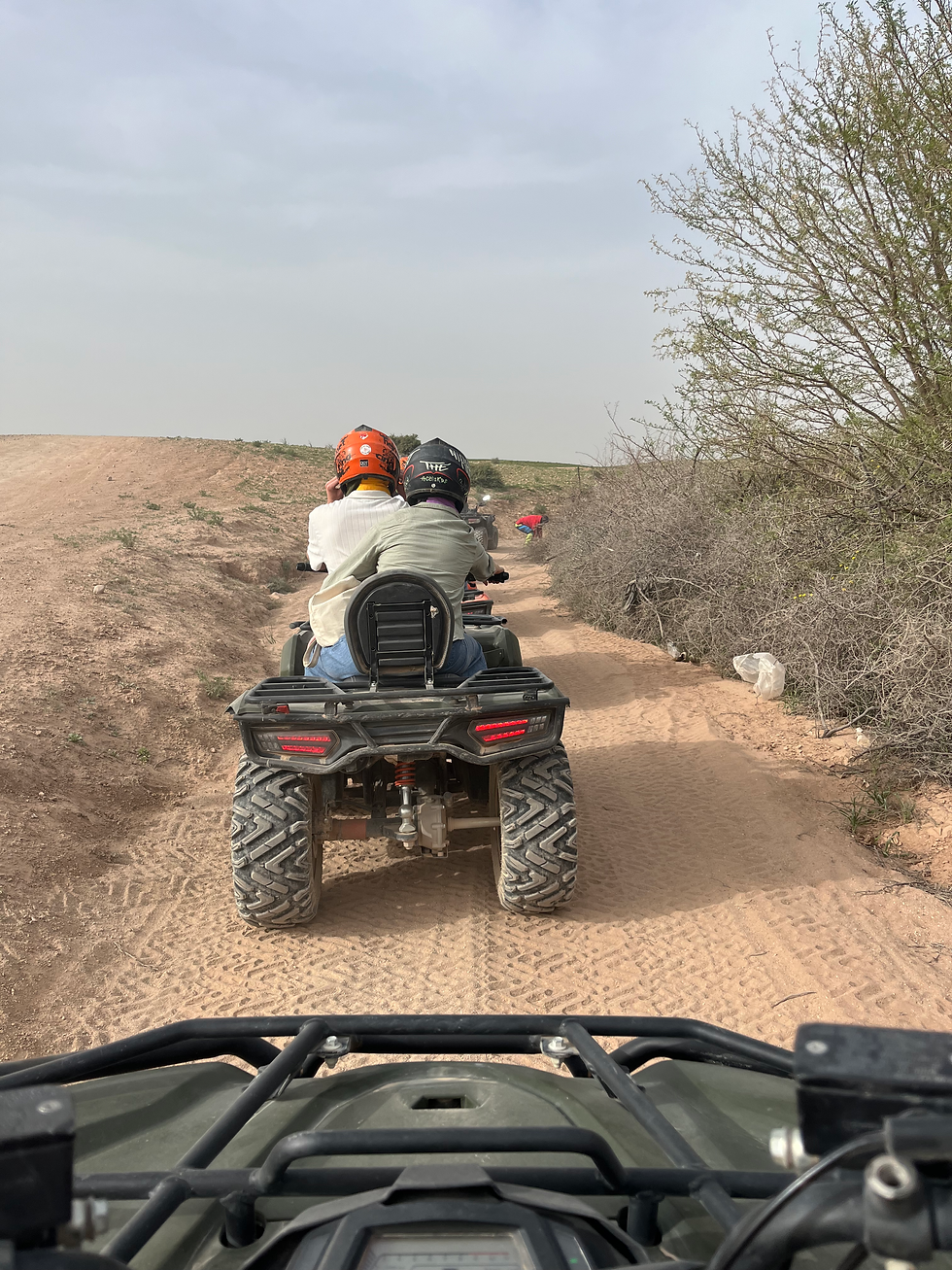
One of the most rewarding experiences of the trip was my day trip to the Agafay Desert, where we learned about the production of Argan oil, rode camels in the rocky dunes, and ate traditional Berber foods.
Marrakech’s Story

The story of Marrakech is complex and layered. To understand what it means to be part of La Francophonie is beyond just speaking a little bit of French. It is about remembering local cultures within this immense tapestry of the global Francophone world, watching how cultures interact and blend. The French history is one single thread among the dozens of histories of Marrakech, but it is an important one to its modern identity.
What La Francophonie means in Marrakech isn’t just about the French language; it’s about a shared history and global connections. That’s what this month is meant to celebrate, and that’s the lesson that Marrakech brought to me.

Written by Kaleb Houle-Lawrence
University Intern


Comments